Working on a larger project? Save 30% on a Kit
Shop Now


Leather Insideradvertorial

How to Restore Faded Leather: 6 Things Most People Miss
Most of us have something leather we have quietly written off. A jacket gone pale at the elbows, a couch bleached on the window side, boots that scuffed grey and stayed that way. It sits in a closet because throwing it out feels wrong and fixing it feels impossible. Here is what actually separates the two.
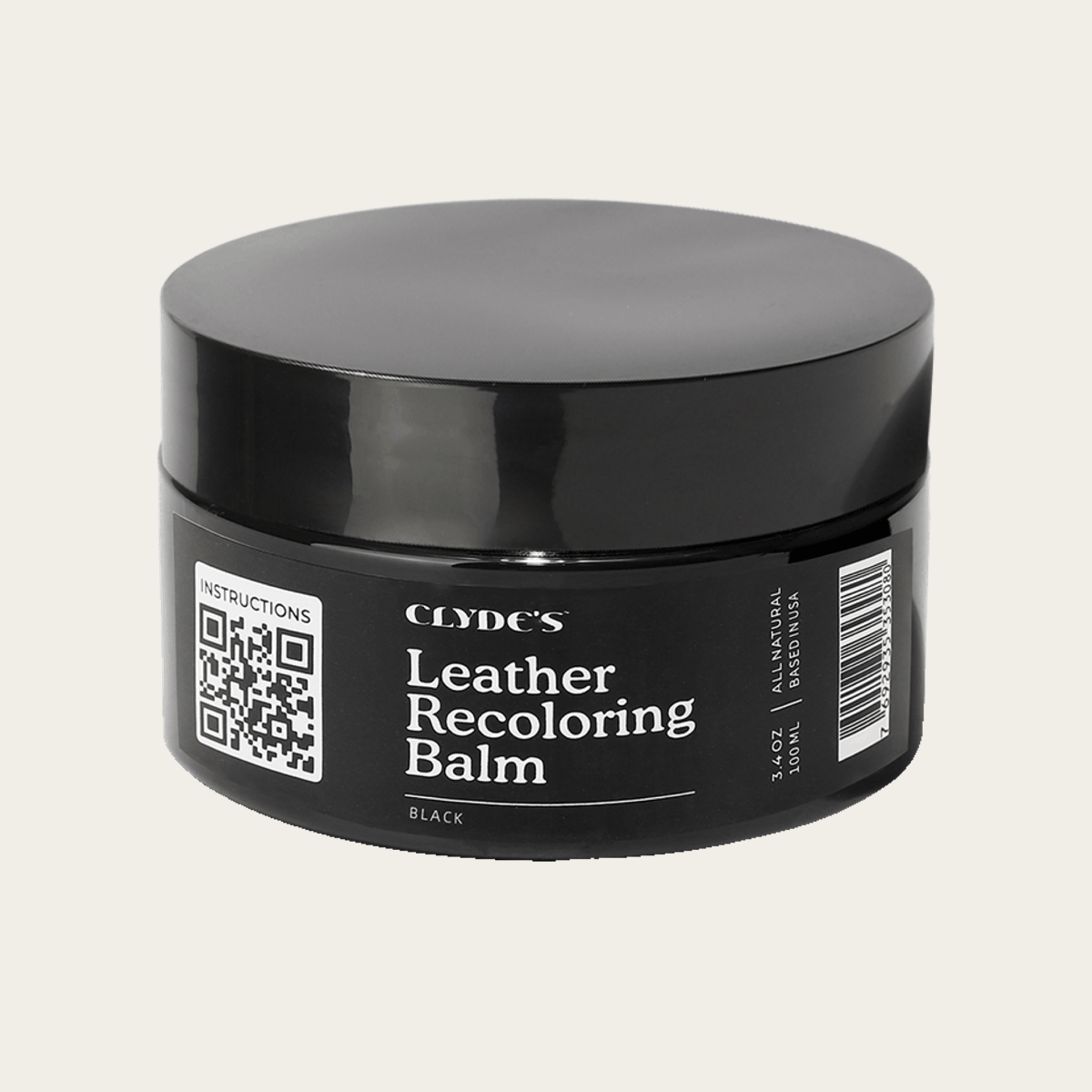
The thing that changed my mind about all of it was Clyde's Leather Recoloring Balm, a color matched balm you work in with a sponge, and it gets nearly everything on this list right.
Leather is the material people assume is past saving. It usually is not. The gap between a write off and something you keep another ten years comes down to a few things nobody explains. Here is what to look for, and why the dye kit you almost bought would have made things worse.

1. Absorbent Leather or Not Decides Everything
The step almost everyone skips takes about thirty seconds. Put a few drops of water on the leather, somewhere that is not damaged. If it soaks in and the spot goes darker, your leather is absorbent and the factory finish has worn off. If the water beads and sits there, that finish is still on, and nothing you rub in will reach the hide underneath.
That one test is the difference between a repair that holds and a mess that rubs off on your clothes. Clyde's balm is made for absorbent leather. If yours beads water, you strip the old finish with their prep and deglaze first, then test again.
I skipped this on a handbag once and wasted an afternoon. Thirty seconds of water would have told me.
★★★★★
“…swear I heard our dear couch sigh with pleasure as it drank in the balm! The Restoration was amazing! And results immediate!!”
Clare M. · Verified buyer

2. Color Matching Is Easier Than It Looks
People stall here, hunting for a shade that matches perfectly straight out of the jar. That is not really how it works. There are more than twenty colors and they mix together, so you build the shade you need instead of hoping to find it.
The coats do the rest of the work. More coats go darker, fewer go lighter, and every swatch is paired with a HEX code so you have something better than memory to match against.
I mixed two browns for a chair that was never going to match anything sold off the shelf. It cost me ten extra minutes and came out right.
Mixable · Layerable · HEX matched
★★★★★
“Used two different dye colors to get the perfect shade needed. Ordered the maroon and the red. Mixed a small amt. as a test first. Color match was very good.”
Deb H. · Verified buyer

3. Dye and Balm Are Not the Same Thing
This is the one that ruins more leather than anything else. Recoloring used to mean dye, and dye is harsh. It lays color on the surface and pulls moisture out of the hide, so the piece looks better for a season and then cracks.
A balm works differently. It carries the color and the conditioning together, so the leather stays soft while the color changes. That is the whole reason Clyde's built theirs the way they did, and it is why I reach for it instead of a dye kit.
My first attempt years ago was a dye. The color held fine. The leather went stiff and split along the fold.
★★★★★
“Easy to use. Water soluble so not a problem for staining clothes. It covered cat scratches beautifully and conditioned the worn and faded cushions back to new.”
Tanis R. · Verified buyer

4. The Prep Is Most of the Job
Nobody wants to hear this, but rubbing the color on is the short part. Clean the leather first with a foam and a cloth so the pores are not packed with old grease and dirt.
Cracks and gouges get filled before any color goes near them, in thin layers, each one dry before the next, then sanded smooth.
★★★★★
“The areas were cracked and discolored. We applied your product as directed. In fact we gave the areas two coats. We were very pleased with the results.”
Susan F. · Verified buyer

5. Cure Time Is Where People Ruin It
Here is the part that catches people out. The coats themselves go on close together, about five minutes apart, with a buff between each one to keep the finish even. It is the final coat that needs the time, 24 to 36 hours, and once it has cured you cannot add any more balm to it.
So get all of your coats on in the one session, then leave the final one alone for its full 24 to 36 hours before you sit on it or wear it. Once it has cured, seal the work with a conditioning cream, which is what keeps the color off your clothes.
I got impatient on a car seat and learned this the expensive way. Patience really is the ingredient.
★★★★★
“It works and doesn't leave any black marks on my jodpurs once it is dry.”
Penny N. · Verified buyer

6. What It's Made Of, and Who Made It
The last thing people skip is what is in the jar and who stands behind it. Clyde's says theirs carries no solvents and nothing flammable or corrosive, which matters when you are working on a couch in a room where kids and dogs live.
They are based in the US and ship out of Asheville, and they back the balm with a lifetime guarantee and free exchanges, so a shade that comes out wrong is not money gone. They have taken it past a hundred thousand restorations.
Fixing what you already own beats replacing it. This is the one that stopped me buying the same furniture twice.
★★★★★
“My tired leather recliner chair and scuffed sofa look and feel like new with these products, Clyde’s customer support and very little effort.”
Susan P. · Verified buyer
1. Absorbent Leather or Not Decides Everything
The step almost everyone skips takes about thirty seconds. Put a few drops of water on the leather, somewhere that is not damaged. If it soaks in and the spot goes darker, your leather is absorbent and the factory finish has worn off. If the water beads and sits there, that finish is still on, and nothing you rub in will reach the hide underneath.
That one test is the difference between a repair that holds and a mess that rubs off on your clothes. Clyde's balm is made for absorbent leather. If yours beads water, you strip the old finish with their prep and deglaze first, then test again.
I skipped this on a handbag once and wasted an afternoon. Thirty seconds of water would have told me.
★★★★★
“…swear I heard our dear couch sigh with pleasure as it drank in the balm! The Restoration was amazing! And results immediate!!”
Clare M. · Verified buyer
2. Color Matching Is Easier Than It Looks
People stall here, hunting for a shade that matches perfectly straight out of the jar. That is not really how it works. There are more than twenty colors and they mix together, so you build the shade you need instead of hoping to find it.
The coats do the rest of the work. More coats go darker, fewer go lighter, and every swatch is paired with a HEX code so you have something better than memory to match against.
I mixed two browns for a chair that was never going to match anything sold off the shelf. It cost me ten extra minutes and came out right.
Mixable · Layerable · HEX matched
★★★★★
“Used two different dye colors to get the perfect shade needed. Ordered the maroon and the red. Mixed a small amt. as a test first. Color match was very good.”
Deb H. · Verified buyer
3. Dye and Balm Are Not the Same Thing
This is the one that ruins more leather than anything else. Recoloring used to mean dye, and dye is harsh. It lays color on the surface and pulls moisture out of the hide, so the piece looks better for a season and then cracks.
A balm works differently. It carries the color and the conditioning together, so the leather stays soft while the color changes. That is the whole reason Clyde's built theirs the way they did, and it is why I reach for it instead of a dye kit.
My first attempt years ago was a dye. The color held fine. The leather went stiff and split along the fold.
★★★★★
“Easy to use. Water soluble so not a problem for staining clothes. It covered cat scratches beautifully and conditioned the worn and faded cushions back to new.”
Tanis R. · Verified buyer
4. The Prep Is Most of the Job
Nobody wants to hear this, but rubbing the color on is the short part. Clean the leather first with a foam and a cloth so the pores are not packed with old grease and dirt.
Cracks and gouges get filled before any color goes near them, in thin layers, each one dry before the next, then sanded smooth.
★★★★★
“The areas were cracked and discolored. We applied your product as directed. In fact we gave the areas two coats. We were very pleased with the results.”
Susan F. · Verified buyer
5. Cure Time Is Where People Ruin It
Here is the part that catches people out. The coats themselves go on close together, about five minutes apart, with a buff between each one to keep the finish even. It is the final coat that needs the time, 24 to 36 hours, and once it has cured you cannot add any more balm to it.
So get all of your coats on in the one session, then leave the final one alone for its full 24 to 36 hours before you sit on it or wear it. Once it has cured, seal the work with a conditioning cream, which is what keeps the color off your clothes.
I got impatient on a car seat and learned this the expensive way. Patience really is the ingredient.
★★★★★
“It works and doesn't leave any black marks on my jodpurs once it is dry.”
Penny N. · Verified buyer
6. What It's Made Of, and Who Made It
The last thing people skip is what is in the jar and who stands behind it. Clyde's says theirs carries no solvents and nothing flammable or corrosive, which matters when you are working on a couch in a room where kids and dogs live.
They are based in the US and ship out of Asheville, and they back the balm with a lifetime guarantee and free exchanges, so a shade that comes out wrong is not money gone. They have taken it past a hundred thousand restorations.
Fixing what you already own beats replacing it. This is the one that stopped me buying the same furniture twice.
★★★★★
“My tired leather recliner chair and scuffed sofa look and feel like new with these products, Clyde’s customer support and very little effort.”
Susan P. · Verified buyer
Lifetime Guarantee · Free Exchanges
Clyde's Leather Recoloring Balm
More Than 20 Shades · Mixable, With HEX Codes to Match
Colors and Conditions · Helps Prevent Cracking and Fading
Sponge Included · Thin Coats, 24 to 36 Hours to Cure
Non-Toxic Formula · No Solvents, Safe Around Kids and Pets
Shop Clyde's Balm →
Lifetime Guarantee | Free Exchanges | Free Shipping on Orders Over $50
Leather Insider is an independent publication. This article is an advertorial and may contain affiliate links. Results may vary.
© 2026 Leather Insider